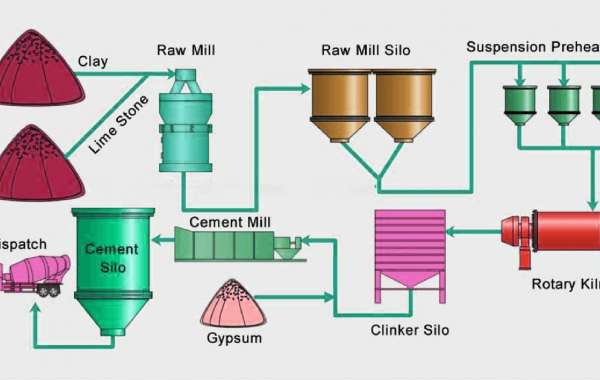
Cement production is a complex and vital process that forms the backbone of modern construction. Leading cement plant manufacturing companies play a pivotal role in delivering the technology and expertise required for efficient production. Understanding the stages and technology involved in cement manufacturing sheds light on how this crucial material is produced, meeting the demands of a growing global infrastructure.
1. Raw Material Extraction
The journey of cement begins with the extraction of raw materials. Key ingredients include limestone, clay, shale, and other materials rich in calcium, silica, alumina, and iron. These are typically mined from quarries using heavy machinery like excavators and loaders.
Advanced technology, such as drones and automated equipment, helps survey and manage quarries efficiently. Real-time monitoring ensures optimal resource utilization and minimizes environmental impact.
2. Crushing and Pre-Homogenization
Once extracted, raw materials are transported to crushing units. Crushers reduce large rocks into smaller, manageable sizes. The crushed materials are then pre-homogenized to achieve a consistent chemical composition.
Pre-homogenization is critical for maintaining the quality of cement. Automated blending systems and advanced sensors ensure precise mixing of raw materials, reducing variability and waste.
3. Raw Material Grinding
The crushed and homogenized materials are fed into grinding mills, where they are ground into a fine powder known as raw meal. Vertical roller mills and ball mills are commonly used for this process.
Grinding efficiency is enhanced by the use of modern technologies such as high-pressure grinding rolls (HPGR) and energy-efficient separators. These innovations reduce energy consumption and improve throughput.
4. Preheating and Calcination
The raw meal is transferred to a preheater tower, where it is heated by hot gases from the kiln. This process removes moisture and begins the chemical transformation of raw materials.
Calcination occurs in the preheater and calciner. Here, limestone (calcium carbonate) decomposes into lime (calcium oxide) and releases carbon dioxide. This step is energy-intensive, making energy optimization a key focus in modern cement plants.
5. Clinker Production in the Kiln
The heart of the cement production process is the rotary kiln. Raw meal enters the kiln, where it is subjected to temperatures as high as 1450°C. This high heat transforms the materials into clinker, small, marble-sized nodules.
Burning alternative fuels, such as biomass and industrial waste, is increasingly common to reduce reliance on fossil fuels. Advanced kiln technologies, including automated controls and AI-driven monitoring, enhance efficiency and reduce emissions.
6. Clinker Cooling and Storage
After exiting the kiln, clinker is rapidly cooled using air or water in a cooler. Rapid cooling is essential to preserve clinker quality and prepare it for subsequent grinding.
Cooled clinker is stored in silos or warehouses before being ground into cement. Modern storage solutions minimize exposure to moisture and contamination.
7. Cement Grinding
Clinker is mixed with gypsum and other additives, such as fly ash or slag, and ground into a fine powder in cement mills. The final product is Portland cement, the most widely used type of cement worldwide.
Energy-efficient grinding technologies, including closed-circuit systems and advanced separators, ensure consistent particle size and quality. Automation and data analytics further optimize this stage, reducing energy usage and operational costs.
8. Packaging and Distribution
The finished cement is packed into bags or stored in bulk containers for transportation. Automated packaging systems improve efficiency, reducing labor costs and errors. Cement is then distributed to construction sites, retailers, and infrastructure projects.
Blockchain technology is increasingly used to enhance transparency and traceability in the supply chain. This ensures that cement reaches customers with accurate information about its origin and quality.
9. Sustainability in Cement Production
Cement manufacturing is energy-intensive and generates significant CO2 emissions. However, innovations are driving sustainability in the industry:
Carbon Capture and Storage (CCS): Captures CO2 emissions for storage or reuse.
Alternative Fuels: Reduces reliance on coal and petroleum by using waste materials.
Low-Carbon Cements: New formulations reduce the clinker-to-cement ratio, cutting emissions.
10. Future Trends in Cement Production
Emerging technologies are poised to revolutionize cement production. AI and machine learning are optimizing processes, while digital twins enable virtual simulations of plant operations. Renewable energy sources, such as solar and wind, are increasingly powering cement plants.
Collaboration between industry leaders, researchers, and governments is essential to accelerate the adoption of sustainable practices. As innovation continues, the cement industry is set to become more efficient, eco-friendly, and resilient.
Conclusion
Cement production is a fascinating blend of tradition and technology. From raw material extraction to the final product, each stage relies on precision and innovation. As the industry evolves, a focus on sustainability and efficiency ensures that cement remains a cornerstone of global development while minimizing its environmental footprint.
Understanding these processes highlights the intricate efforts behind producing the material that literally builds our world.