
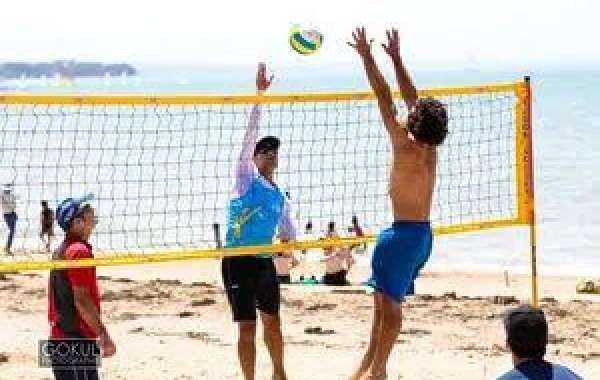
Passing, setting, and hitting all lead up to the greatest point in volleyball; among those, the volleyball set becomes very crucial where it connects passing and attacking. From learning the alphabet to perfection on the court, learning how to do the perfect set can break or make your game.
What is a Volleyball Set?
A volleyball set is the second of the three allowed touches per team during a rally. A set is a soft, high pass that puts the ball in prime position for a hitter to spike. The set's accuracy, timing, and communication is very clear with the teammates. The setter is often the strategic captain of the team, like a quarterback in football, because he is the person responsible for that play.
Type of Sets in Volleyball
There is a specific set for a situation. Here is a quick summary of the most common types:
High Set: A very high pass usually to the outside hitter.
Quick Set: A very low and fast set that is meant by middle hitters.
Back Set: One sent behind the setter to catch the blockers by surprise.
Shoot Set: A very fast and flat set delivered very close to the net.
Jump Set: This is done while the setter is in the air so it must be faster.
Using these types of sets at the right time is key to keeping an unpredictable and aggressive offense.
Setting Techniques: The Roots of Reliability
To be a consistent setter, you require the following techniques that are core:
Hand Positioning: fingers form a triangle above the forehead; hands are relaxed but firm.
Footwork: get under ball in quick, balanced movements.
Body Alignment: square shoulders to the target; hips low.
Follow Through : extend arms toward the target for a clean finish.
Tip: Always keep your eyes on the ball and communicate with your hitters early.
Common Mistakes to Avoid when Setting
Mistakes happen to everyone including those that have been in the game for years.
Double Contact: An uneven touch of the ball with both hands.
Lift / Carry: Holding the ball for a longer time than intended.
Timing: Setting too early or too late, thus off-setting the hitter's timing.
Placement: Missing the attack zone of the hitter.
Awareness and practice with feedback will work toward fixing these mistakes.
Best Drills for Training the Setter
Muscle memory and hand control must be developed; with that realization, include these drills:
Wall Sets- A player stands on the wall for close setting practice to gain control.
Target Work- Focusing on hitting a target net or hoop.
Partner Passing Drills-Focused on setting with a partner for quick repetitions.
Footwork Drills- Setting the ball while incorporating cone drills to find an in-game setting.
Setting drills should comprise about 15-20 minutes of every practice
Must-have Equipment for Setters
So, to fast-track one's improvement, consider purchasing the following:
Training Volleyballs (slightly heavy for better hand-strength development)
Setting Targets (to practice accuracy)
Rebounders/Setting Trainers (to practice alone)
Grip Trainers (to work on finger strength)
The Setter Functions in Game Strategy
A good setter does much more than put the ball up:
Calls plays according to the weaknesses in the opponent's defense.
Modifies tempo according to the pace of the match.
Reads the blockers and knows how to defeat them.
Directs the communication between the back row and front-row players.
Indoor Vs Beach Volleyball Settings
Contrary to their commonalities, each presents unique challenges:
Beach volleyball: Two players per side; increased movement, all the more responsibility.
Environmental Challenges: Wind and sand are factors that come into play for ball control.
Hand sets: Tended to be more scrutinized on the beach, requiring cleaner execution.
Conclusion
Setting in volleyball is an art requiring dedication, awareness, and continuous practice. Learn types of sets and master your setting technique while avoiding common mistakes: your presence as a setter would be important. Be it indoors, or on the beach, a good set will elevate your entire team's performance.