

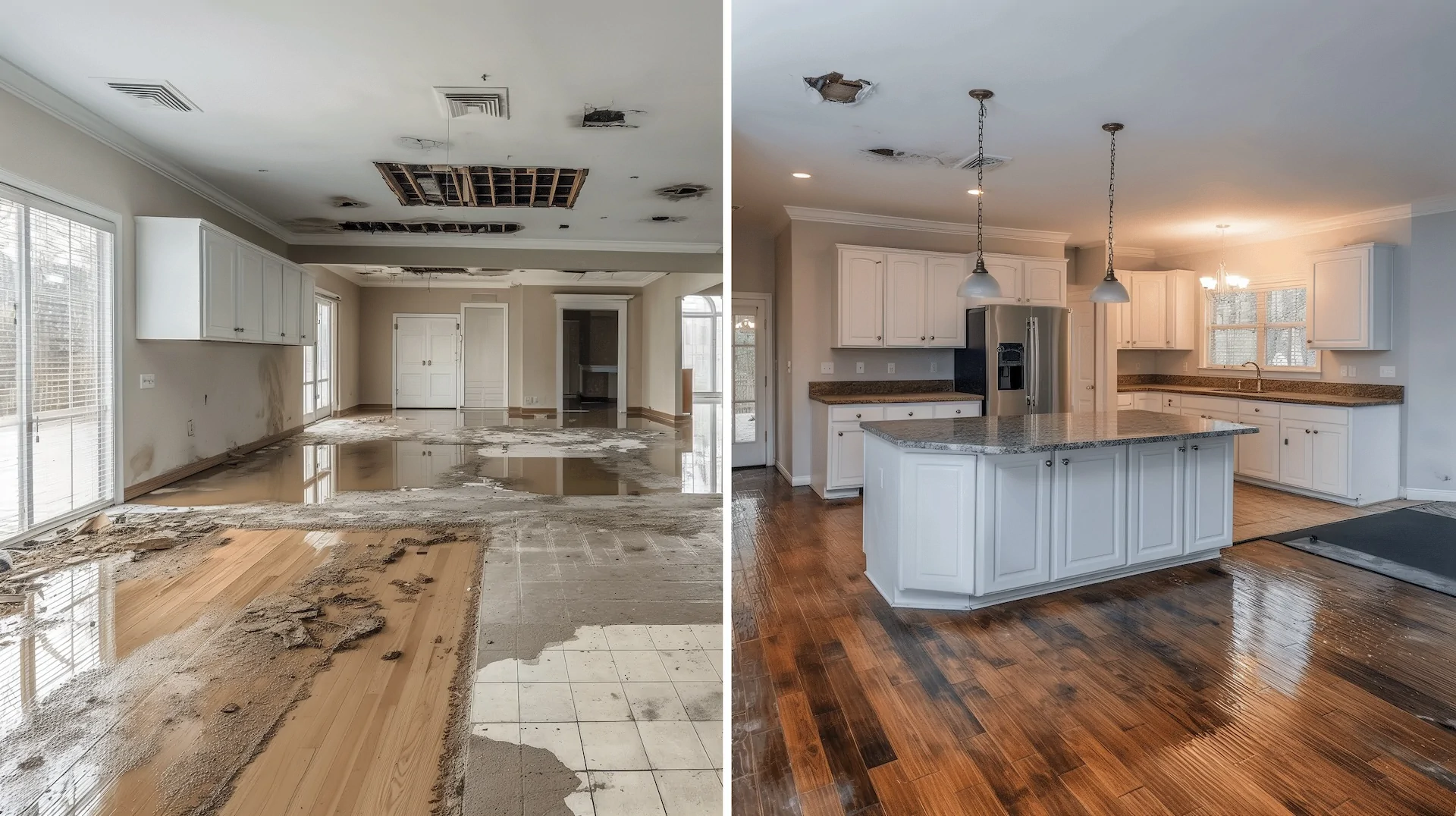
Advanced drying equipment reduces water damage recovery time by 30-70% compared to traditional methods. Modern equipment like LGR dehumidifiers, air movers, and thermal imaging cameras extracts moisture faster, detects hidden water, and monitors drying progress with precision. This significantly minimizes secondary damage risks such as mold growth and structural deterioration while lowering overall restoration costs.
Professional-grade drying technology works by creating optimized airflow patterns and using specialized moisture extraction techniques that household fans and dehumidifiers simply cannot match. These systems operate based on scientific principles of evaporation, condensation, and targeted heat application to accelerate the drying process in walls, floors, and other building materials.
Types of Advanced Drying Equipment
Different water damage scenarios require specific equipment combinations for optimal results. The right equipment selection depends on the water category, affected materials, and environmental conditions.
High-Volume Air Movers
Air movers create high-velocity airflow across wet surfaces, accelerating evaporation by displacing the boundary layer of saturated air. These devices force moisture into the air, where dehumidifiers can capture it.
Bonus Tip: Position air movers at a 15-45 degree angle toward walls for maximum effectiveness rather than pointing directly at surfaces.
Professional Dehumidifiers
Professional dehumidifiers extract moisture from the air at much higher rates than consumer models. They maintain optimal humidity levels throughout the drying process.
Dehumidifier Type | Daily Extraction Capacity | Best For | Energy Efficiency |
|---|---|---|---|
Refrigerant | 30-70 pints | Moderate humidity environments (60-80%) | Moderate |
Low Grain Refrigerant (LGR) | 80-140 pints | High humidity environments | High |
Desiccant | 75-200 pints | Low temperature environments | Lower |
Specialized Extraction Equipment
These tools pull water directly from materials before the evaporation process begins.
Equipment Type | Extraction Rate | Application |
|---|---|---|
Truck-Mount Extractors | 25-50 gallons per minute | Large-scale commercial/residential flooding |
Portable Extractors | 5-15 gallons per minute | Targeted extraction in specific areas |
Floor Mats/Extraction Systems | 1-3 gallons per hour | Hardwood floors and subfloors |
Moisture Detection Technology
These tools locate hidden moisture and track drying progress.
- Thermal Imaging Cameras: Identify temperature differences indicating moisture behind walls and under floors
- Moisture Meters: Measure precise moisture content in different materials
- Hygrometers: Monitor relative humidity levels in affected spaces

How Advanced Equipment Accelerates Recovery
Advanced drying equipment transforms water damage restoration through faster, more thorough drying processes.
Scientific Drying Process
Professional equipment creates an environment where physics works to your advantage:
- Surface evaporation accelerates with strategically positioned air movers
- Dehumidifiers capture evaporated moisture before it can resettle
- Continuous monitoring ensures all materials reach appropriate dryness levels
Comparison: Standard vs. Advanced Drying Approaches
Factor | Standard Methods | Advanced Equipment | Difference |
|---|---|---|---|
Average Drying Time | 5-10 days | 2-4 days | 50-70% faster |
Mold Prevention Success Rate | 60-70% | 90-95% | 25-35% improvement |
Structural Component Salvage Rate | 40-60% | 70-90% | 30% more materials saved |
Long-term Issues Reported | 15-30% | 5-10% | 10-25% fewer callbacks |
According to recent industry reports, properties dried with advanced equipment show a 75% reduction in secondary damage claims compared to those using conventional methods.
Preventing Secondary Damage
Water damage creates a narrow window before secondary issues develop:
- Mold growth begins within 24-48 hours
- Structural materials weaken progressively with moisture exposure
- Odors develop and become increasingly difficult to remove
Advanced equipment significantly extends this window by rapidly removing both surface and trapped moisture.
Things to Consider Before Making a Decision
Several factors influence equipment selection and drying approach for your specific situation.
Damage Assessment Factors
- Water category (clean, gray, or black)
- Affected materials (porous vs. non-porous)
- Duration of exposure
- Building construction type
- Climate conditions
Equipment Access Options
Consider how you'll access appropriate equipment:
- Professional restoration services (full-service including equipment and expertise)
- Equipment rental (requires knowledge of proper setup and monitoring)
- Purchase (typically only economical for contractors or frequent needs)
Cost vs. Benefit Analysis
While advanced equipment may seem more expensive initially, the total cost analysis often favors professional-grade technology:
Cost Factor | Standard Approach | Advanced Equipment |
|---|---|---|
Initial Equipment Cost | Lower | Higher |
Labor Hours Required | More | Fewer |
Secondary Damage Risk | Higher | Lower |
Total Recovery Cost | Often higher long-term | Usually lower long-term |
Bonus Tip: Many insurance policies cover professional drying services, but not subsequent mold remediation if inadequate drying leads to fungal growth.
Common Equipment Applications
Different water damage scenarios require specific equipment approaches.
Residential Flooding
Homes typically benefit from a combination of:
- 1 LGR dehumidifier per 900-1,200 square feet
- 1 air mover per 50-70 square feet of affected area
- Moisture detection equipment to locate all affected materials
Commercial Water Damage
Larger spaces require scaled equipment deployment:
- Multiple dehumidifiers are calculated based on cubic footage
- Specialized air movement systems for open spaces
- Documentation systems for insurance compliance
Specialty Situations
Some scenarios require specialized approaches:
- Document recovery: Freeze-drying technology
- Electronics: Controlled humidity environments
- Historic structures: Low-temperature drying systems
Topic FAQ
How much faster does professional equipment dry a space compared to fans and home dehumidifiers?
Professional equipment typically dries spaces 3-5 times faster than consumer-grade options. A room that might take 9-12 days with household equipment often dries in 2-3 days with proper professional setups.
Can advanced drying equipment save hardwood floors after flooding?
Yes, specialized extraction systems like floor mats can often save hardwood floors if applied within the first 24-48 hours after water exposure. These systems pull moisture directly from below and within flooring materials before permanent damage occurs.
How do restoration professionals determine what equipment to use?
Professionals conduct thorough moisture mapping using meters and thermal cameras to identify all affected areas. They then calculate the precise equipment needs based on room size, materials affected, humidity levels, and temperature to create an optimal drying environment.
Is it worth renting professional equipment versus hiring restoration professionals?
Equipment rental works well for minor incidents if you understand proper placement and monitoring. However, restoration professionals bring expertise in moisture detection, equipment setup, and ongoing adjustments that significantly impact drying efficiency. Most major water damage events benefit from professional service.
How long should drying equipment run each day?
For maximum efficiency, drying equipment should run continuously until materials reach their dry standard. Interrupting the drying cycle can significantly extend the overall drying time and increase the risk of secondary damage like mold growth.
Make the Right Decision
Advanced drying equipment dramatically reduces water damage recovery times by creating optimized environments where evaporation and dehumidification work together efficiently. The investment in proper equipment pays off through faster recovery, reduced secondary damage, and better long-term outcomes.
Evaluate your specific situation based on the extent of water damage, the types of materials affected, and the resources available to you. Whether you choose professional restoration services or access to advanced equipment through rental, using the right tools makes a measurable difference in recovery time and results.