
Success is usually associated with visible achievements.
A growing organization. A strong professional reputation. Significant financial resources. A successful leadership career. A philanthropic initiative with meaningful reach.
But visible success is only one part of the story.
Behind every meaningful achievement is a collection of systems that influence how decisions are made, how resources are allocated, how people respond to incentives, and how institutions develop over time.
These systems are not always obvious.
They can exist inside governance structures, economic environments, organizational relationships, compliance frameworks, and decision-making processes. They can influence outcomes without appearing in a traditional performance report.
For leaders operating in complex environments, understanding these underlying forces can become an essential part of strategic thinking.
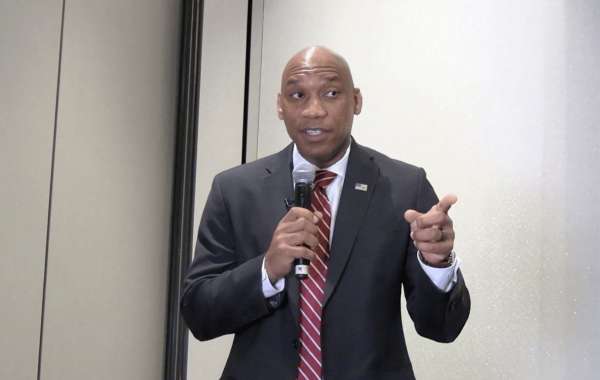
This is the foundation of the work of Antomius Wise, an institutional systems speaker and executive education strategist focused on helping leaders, advisors, philanthropic networks, and institutional audiences make structural forces more visible.
His work explores the space between individual performance and institutional outcomes—and the structures connecting the two.
Performance Is Only One Part of the Equation
High performance is valuable.
Discipline matters. Expertise matters. Ambition matters. Execution matters.
But there is a point where individual performance alone cannot explain the complexity of an outcome.
A leader can make excellent decisions while operating within a structure that creates unnecessary limitations. An organization can have talented people while lacking the governance required to support its next stage. A philanthropic initiative can have strong intentions while facing structural conditions that influence how effectively resources create lasting impact.
This does not mean performance is irrelevant.
It means performance exists within a larger environment.
That environment deserves attention.
Structural thinking encourages leaders to examine the architecture surrounding an outcome rather than focusing exclusively on the outcome itself.
What Happens Beneath the Surface?
Every institution has visible and invisible elements.
The visible elements include people, departments, strategies, programs, policies, investments, and decisions.
The less visible elements include incentives, authority, accountability, assumptions, relationships, and economic structures.
The second category can be particularly important because it often influences how the first category operates.
Consider governance.
A governance structure determines more than who attends meetings. It can influence how authority is distributed, how accountability is established, and how major decisions are evaluated.
Consider incentives.
An organization may communicate one objective while unintentionally rewarding behavior that produces another result.
Consider economic systems.
A leader may see a specific opportunity without immediately recognizing the broader economic forces influencing its development.
Structural clarity creates an opportunity to examine these connections.
Moving From Immediate Decisions to Strategic Architecture
Leadership often requires immediate decisions.
A problem needs to be solved. A strategy needs to be approved. A resource needs to be allocated. A new initiative needs to be launched.
But leaders can also benefit from stepping back and asking what the decision means within the larger structure.
What does this decision reinforce?
What behavior could it encourage?
What governance implications could follow?
How does it affect the organization's long-term architecture?
What happens if the surrounding environment changes?
These questions do not replace execution.
They strengthen the context in which execution occurs.
For executive leadership teams and entrepreneurial organizations, this can be particularly relevant during periods of growth or transition.
The systems that worked when an organization was smaller may not be sufficient when responsibilities expand.
Growth therefore creates a structural question:
What must change beneath the surface for the organization to continue developing effectively?
Building Institutions, Not Just Businesses
Entrepreneurship often begins with an idea.
Institution building requires something more.
A business can grow through a successful product, service, or market opportunity. An institution must eventually develop structures capable of supporting people, decisions, resources, relationships, and long-term objectives.
This transition changes the questions leaders need to ask.
Who makes important decisions?
How is accountability maintained?
How are incentives aligned?
What happens when leadership changes?
How can institutional knowledge remain available?
What structures protect the organization's purpose while allowing it to evolve?
Institutional thinking helps leaders consider these questions before structural limitations become more difficult to address.
For founders and executive teams, the objective is not simply to achieve another milestone.
It is to understand what kind of organization is being built beneath the milestone.
Strategic Philanthropy Requires a Wider Lens
Philanthropy also becomes more complex when the objective moves from immediate support toward lasting impact.
A charitable contribution may address a need, but the systems surrounding that contribution can influence its long-term effectiveness.
Governance can influence organizational sustainability.
Economic infrastructure can influence community outcomes.
Institutional capacity can influence whether programs continue.
Mission alignment can influence whether resources remain connected to intended objectives.
Strategic philanthropy therefore creates an opportunity to think beyond the act of giving.
It asks leaders to consider how capital interacts with systems.
Antomius Wise approaches strategic philanthropy as an educational pathway into these questions, helping donors and founders explore governance, economic structure, institutional thinking, and long-horizon impact.
The focus is educational rather than transactional.
The goal is to make the complete landscape of potential impact more visible.
Creating Space for High-Level Conversations
Complex questions often require an environment where leaders can slow down.
Private executive briefings provide that environment.
These conversations are designed for executive teams, wealth-advisor networks, philanthropic leaders, high-income professionals, founders, and family office environments seeking deeper discussions around structural issues.
Topics may include strategic philanthropy, governance discipline, economic systems, institutional thinking, incentive alignment, and family legacy education.
The value of a private briefing is not necessarily that it produces an immediate answer.
Instead, it creates space to examine assumptions before they become decisions.
Leaders can explore what they already know, identify what they may be overlooking, and consider how different structures could influence the outcome.
Sometimes the most valuable preparation for a major decision is not another strategy document.
It is a better understanding of the system in which the strategy will operate.
Executive Education That Changes Perspective
Education has greater value when it changes the way people interpret their environment.
This principle informs Antomius Wise's work across keynote speaking, workshops, and executive education.
A keynote can introduce a new way of seeing familiar challenges.
A workshop can create space to examine those ideas more deeply.
An executive education engagement can provide frameworks that leaders can carry into future conversations and decisions.
The objective is not simply to transfer information.
It is to develop mental models.
When leaders understand concepts such as governance, incentive alignment, economic systems, institutional thinking, and strategic philanthropy as interconnected elements, they can begin examining complex situations through a broader lens.
Preparing for the Long Horizon
Short-term results are visible.
Long-term impact is structural.
An organization may achieve a major milestone today, but its future depends on the systems supporting that achievement.
Leadership will change.
Markets will shift.
Families will grow.
Institutions will evolve.
Economic conditions will develop in unexpected ways.
Philanthropic priorities may change over time.
Durability therefore requires structures capable of adapting without losing their underlying purpose.
This is why long-horizon thinking belongs alongside governance, institutional development, economic understanding, and strategic philanthropy.
The future is not created only through individual decisions.
It is also created through the structures those decisions establish.
Making the System Visible
The deeper challenge for many leaders is not a shortage of information.
It is knowing how the information connects.
A governance decision can influence incentives.
Incentives can influence behavior.
Behavior can influence organizational outcomes.
Economic conditions can influence available opportunities.
Institutional structures can determine whether successful outcomes become sustainable.
Seeing these connections is what structural clarity makes possible.
Antomius Wise brings this perspective into executive rooms, institutional audiences, universities, associations, philanthropic environments, and private leadership conversations.
Through keynote engagements, workshops, executive education, and private briefings, his work encourages leaders to look beneath visible performance and examine the architecture shaping it.
Because lasting leadership is not only about achieving results.
It is about understanding the structures that make those results possible—and having the clarity to consider what those structures can create next.
When leaders learn to see beyond the immediate outcome, they can begin asking more consequential questions about governance, capital, institutional growth, philanthropy, and long-term impact.
And those questions can become the foundation for building not just successful organizations, but stronger institutions designed to endure.