
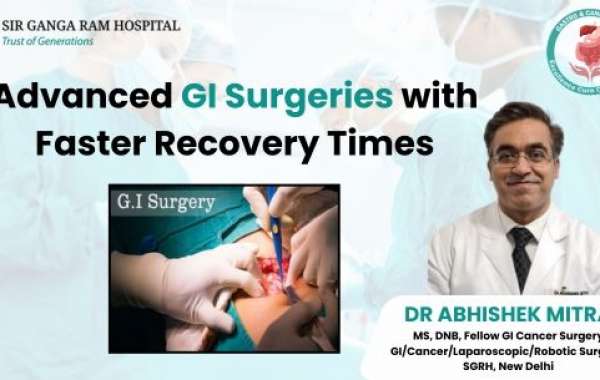
Surgical treatment for gastrointestinal cancer has changed considerably over the years. While open surgery remains an important option for many complex operations, advances in laparoscopic and robotic techniques have introduced additional approaches for appropriately selected patients.
For someone researching a Gastrointestinal Cancer Surgeon in Delhi, understanding these surgical approaches can help put conversations about treatment into perspective.
The important question is not simply whether a procedure is “open,” “laparoscopic,” or “robotic.” The more relevant question is whether the chosen approach can safely and appropriately treat the patient's particular cancer.
What Is Open Gastrointestinal Cancer Surgery?
Open surgery is performed through a larger abdominal incision that allows the surgeon direct access to the organs and surrounding structures.
It remains an important approach for complex gastrointestinal and hepatobiliary procedures.
Open surgery may be considered when:
- The tumor is extensive
- Major blood vessels are involved
- Multiple structures need to be addressed
- The operation is technically complex
- Previous surgery has significantly altered the anatomy
- A minimally invasive approach may not be appropriate
The choice of open surgery does not mean that treatment is outdated. For certain complex cancers, it can be an appropriate surgical strategy.
What Is Laparoscopic Surgery?
Laparoscopic surgery uses several small incisions through which a camera and specialized instruments are introduced.
The surgeon views the operative field on a monitor while performing the procedure.
Depending on the cancer and operation, laparoscopic techniques may be used for selected:
- Colon procedures
- Rectal procedures
- Stomach procedures
- Other abdominal operations
Potential advantages of minimally invasive surgery can include smaller incisions and, in suitable patients, recovery benefits compared with traditional open surgery.
However, these benefits need to be considered alongside the complexity of the cancer and the technical requirements of the operation.
Understanding Robotic GI Cancer Surgery
Robotic surgery is another form of minimally invasive surgery.
The surgeon controls specialized instruments from a console. The system can provide a magnified three-dimensional view and allow precise instrument movements.
Robotic techniques may be considered for selected gastrointestinal procedures, including some colorectal and upper gastrointestinal operations.
A GI Oncosurgeon in Delhi can determine whether robotic surgery is suitable based on the patient's tumor, anatomy, previous procedures, and the operation required.
Is Robotic Surgery Suitable for Everyone?
No.
A robotic platform is a surgical tool rather than a treatment by itself.
Whether robotic surgery is appropriate depends on factors such as:
- Cancer location
- Tumor size and extent
- Anatomical considerations
- Previous abdominal surgery
- Need for complex reconstruction
- Surgeon's experience
- Overall patient condition
In some situations, open or conventional laparoscopic surgery may be more appropriate.
The priority should remain safe and effective cancer treatment.
Colon Cancer and Minimally Invasive Surgery
Colon cancer is one area where minimally invasive surgery may be considered for appropriately selected patients.
A Colon Cancer Surgeon in Delhi may discuss laparoscopic or robotic surgery depending on the location of the tumor and the required operation.
The procedure generally involves removing the affected section of the colon along with regional lymph nodes.
The remaining bowel is then usually reconnected when medically and technically appropriate.
The exact operation depends on where the tumor is located.
Robotic and Laparoscopic Approaches in Rectal Cancer
Rectal surgery can be technically demanding because the rectum is located deep within the pelvis.
The confined pelvic space can make surgical access challenging.
For selected patients, minimally invasive techniques may provide improved visualization and instrument maneuverability.
However, the decision must consider the cancer's location, stage, relationship to surrounding structures, and the need to achieve appropriate cancer clearance.
For patients considering Rectal Cancer Treatment in Delhi, the surgical approach should therefore be discussed in the context of the complete treatment plan.
Stomach Cancer Surgery and Minimally Invasive Techniques
Depending on tumor location and stage, stomach cancer surgery can involve partial or total removal of the stomach.
Laparoscopic and robotic techniques may be considered for selected patients and procedures.
However, the appropriate approach depends on the specific cancer and the complexity of the operation.
Patients looking for Stomach Cancer Treatment in Delhi should ask whether minimally invasive surgery is appropriate in their particular situation rather than assuming that it is automatically preferable.
Liver Surgery Requires a Different Perspective
Liver surgery can range from relatively limited removal of a tumor to complex procedures involving large portions of the liver.
A Liver Cancer Surgeon in Delhi must consider both the tumor and the amount of healthy liver that will remain after surgery.
Minimally invasive liver surgery may be suitable for selected tumors, depending on their size, location, number, and relationship with important vessels and bile ducts.
For more complex cases, an open approach may still be appropriate.
Pancreatic Surgery Is Highly Specialized
Pancreatic operations are among the more complex procedures in abdominal surgery.
The pancreas is located near major blood vessels and several important organs.
A patient undergoing Pancreatic Cancer Treatment in Delhi may therefore require detailed preoperative imaging and evaluation before surgery is considered.
Depending on the operation and individual anatomy, open, laparoscopic, or robotic approaches may be discussed.
The surgical team's experience with complex pancreatic procedures is an important consideration.
Gallbladder and Hepatobiliary Surgery
Gallbladder cancer and other hepatobiliary tumors can require surgery involving more than the gallbladder itself.
Depending on the extent of disease, treatment may involve the liver, bile ducts, lymph nodes, or surrounding structures.
A Hepatobiliary Cancer Surgeon in Delhi can assess whether the disease is technically resectable and what type of operation may be required.
The surgical approach is selected according to the complexity and location of the disease.
What Does “Minimally Invasive” Actually Mean?
The term “minimally invasive” generally refers to the size and method of surgical access.
It does not mean that the cancer itself is minor.
A minimally invasive operation can still be a major cancer procedure involving removal of an organ or part of an organ and regional lymph nodes.
Patients should therefore distinguish between:
Minimally invasive access
and
The complexity of the cancer operation itself.
A laparoscopic or robotic operation can require substantial surgical expertise.
Does Smaller Incision Mean Faster Recovery?
Smaller incisions may contribute to recovery advantages in appropriately selected procedures, but recovery depends on much more than incision size.
Factors include:
- Type of operation
- Amount of tissue removed
- Patient's overall health
- Nutritional status
- Complications
- Previous treatments
- Hospital care
- Physical activity after surgery
Therefore, recovery expectations should be discussed with the treating surgical team.
Surgical Technology Is Only One Part of Cancer Care
Modern cancer treatment involves more than the operating room.
Before surgery, specialists may evaluate imaging and pathology to establish the extent of disease.
After surgery, the specimen is examined by pathology to determine important cancer characteristics.
Depending on the diagnosis, additional chemotherapy, radiation, targeted therapy, immunotherapy, or surveillance may be recommended.
This means surgical technology should be viewed as one component of comprehensive cancer care.
What Patients Should Ask About Robotic or Laparoscopic Surgery
If minimally invasive surgery is proposed, patients can ask:
- Is this approach appropriate for my cancer?
- How extensive is the operation?
- What part of the organ will be removed?
- What are the possible risks?
- Could the operation need to be converted to open surgery?
- How many days of hospitalization might be expected?
- What could recovery involve?
- Will I require chemotherapy or another treatment afterward?
- What changes to digestion or bowel function should I expect?
These questions help shift the conversation from technology alone to the complete treatment plan.
How to Evaluate a GI Cancer Surgeon
Patients searching for a Top Gastrointestinal Cancer Surgeon in Delhi, Gastrointestinal Surgeon in Delhi, or GI Cancer Doctor in Delhi can look beyond marketing terminology.
Useful information can include:
- Relevant medical qualifications
- Specialized cancer-surgery training
- Experience with the specific type of gastrointestinal cancer
- Experience with the proposed procedure
- Hospital infrastructure
- Availability of oncology and critical-care support
- Communication about risks and alternatives
A surgeon's experience should be considered in relation to the specific operation a patient may require.
Questions About Experience Are Reasonable
Patients should feel comfortable asking their surgeon about experience with the proposed procedure.
For example:
How frequently do you perform this type of operation?
Which surgical approaches do you use for this cancer?
What factors determine whether you choose open, laparoscopic, or robotic surgery?
What complications should I know about?
What happens if minimally invasive surgery cannot safely be completed?
Clear answers can help patients understand the practical considerations involved in their operation.
Technology Should Support, Not Replace, Surgical Judgment
Advanced equipment can assist surgeons, but technology does not replace clinical decision-making.
The surgeon must still determine:
- Whether surgery is appropriate
- How much tissue should be removed
- Which structures need preservation
- How lymph nodes should be managed
- Which surgical approach is suitable
- How the operation fits into the overall cancer treatment plan
For this reason, patients should focus on the complete clinical strategy rather than selecting a procedure solely because it uses newer technology.
Recovery and Follow-Up Remain Important
After gastrointestinal cancer surgery, follow-up remains an essential part of care.
Patients may require monitoring of:
- Wound healing
- Nutrition
- Bowel function
- Digestive symptoms
- Weight
- Medication requirements
- Pathology results
- Need for additional cancer treatment
The follow-up schedule depends on the type and stage of cancer and the treatment received.
Conclusion
Modern gastrointestinal surgery offers several surgical approaches, including open, laparoscopic, and robotic procedures. Each has an appropriate role, and the choice depends on the cancer rather than the technology alone.
For patients exploring GI Cancer Specialist in Delhi, Colon Cancer Surgeon in Delhi, Colorectal Cancer Surgeon in Delhi, Rectal Cancer Treatment in Delhi, Stomach Cancer Treatment in Delhi, Liver Cancer Treatment in Delhi, or Pancreatic Cancer Treatment in Delhi, understanding the differences between surgical techniques can help make specialist consultations more informative.
The most important consideration is an individualized treatment plan that addresses the cancer effectively while taking the patient's anatomy, health, treatment goals, and recovery into account.